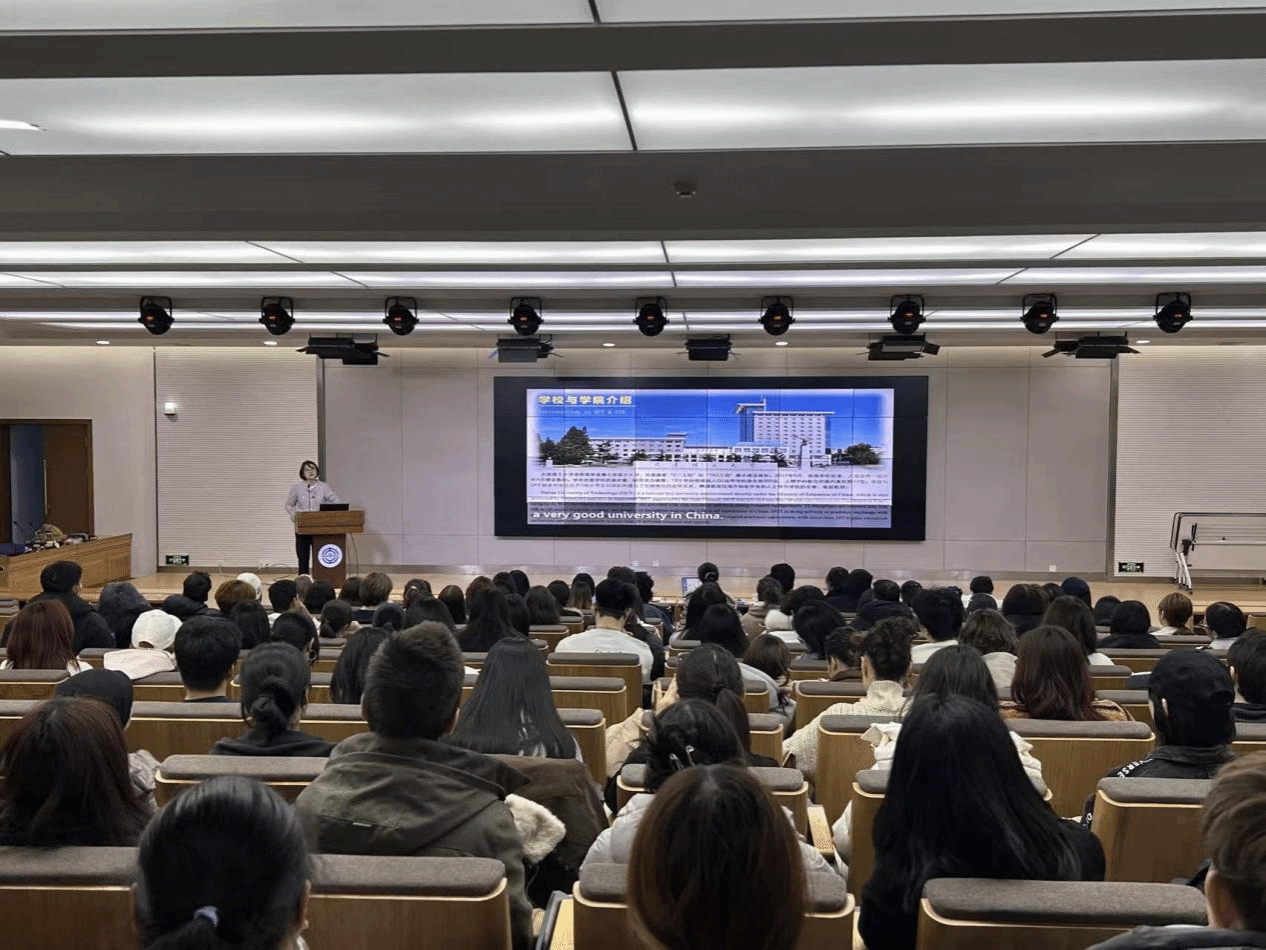
To help students gain a comprehensive understanding of the university and school's educational framework, learning environment, and the training system of the Chinese Language Training Center, as well as to guide them in clarifying their learning objectives, content, and requirements, rationally planning their academic tasks, and quickly adapting to successfully embark on the new semester, the Chinese Language Training Center successfully held its 2026 Spring Semester "New Semester Academic Kick-off Meeting" at 18:00 on March 20, 2026, in Area A, Activity Center 501 of the Student Culture Center. The meeting was hosted by Qiao Xinyue from the Academic Affairs Office of the School of International Education. Attendees included Guo Hanning, Assistant Dean of the School of International Education; Song Peng, Director of the Chinese Language Training Center; group leaders for each grade level; and Chinese language students enrolled in the center for the spring semester.
First, Ms. Guo Hanning, Assistant Dean of the School of International Education, provided a concise overview of the basic circumstances of Dalian University of Technology, the School of International Education, and the Chinese Language Training Center. From the university's development profile, to the talent cultivation system of the School of International Education, and then to the teaching structure and faculty team of the Chinese Language Training Center, Ms. Guo systematically explained the crucial role of this three-tier organizational system in students' academic and campus life. Through this introduction, students enhanced their overall understanding of the university, deepened their familiarity with the learning environment, and further clarified the academic platform they are on and the resource support available to them, thereby laying a solid foundation for integrating into campus life more quickly and successfully completing their studies.
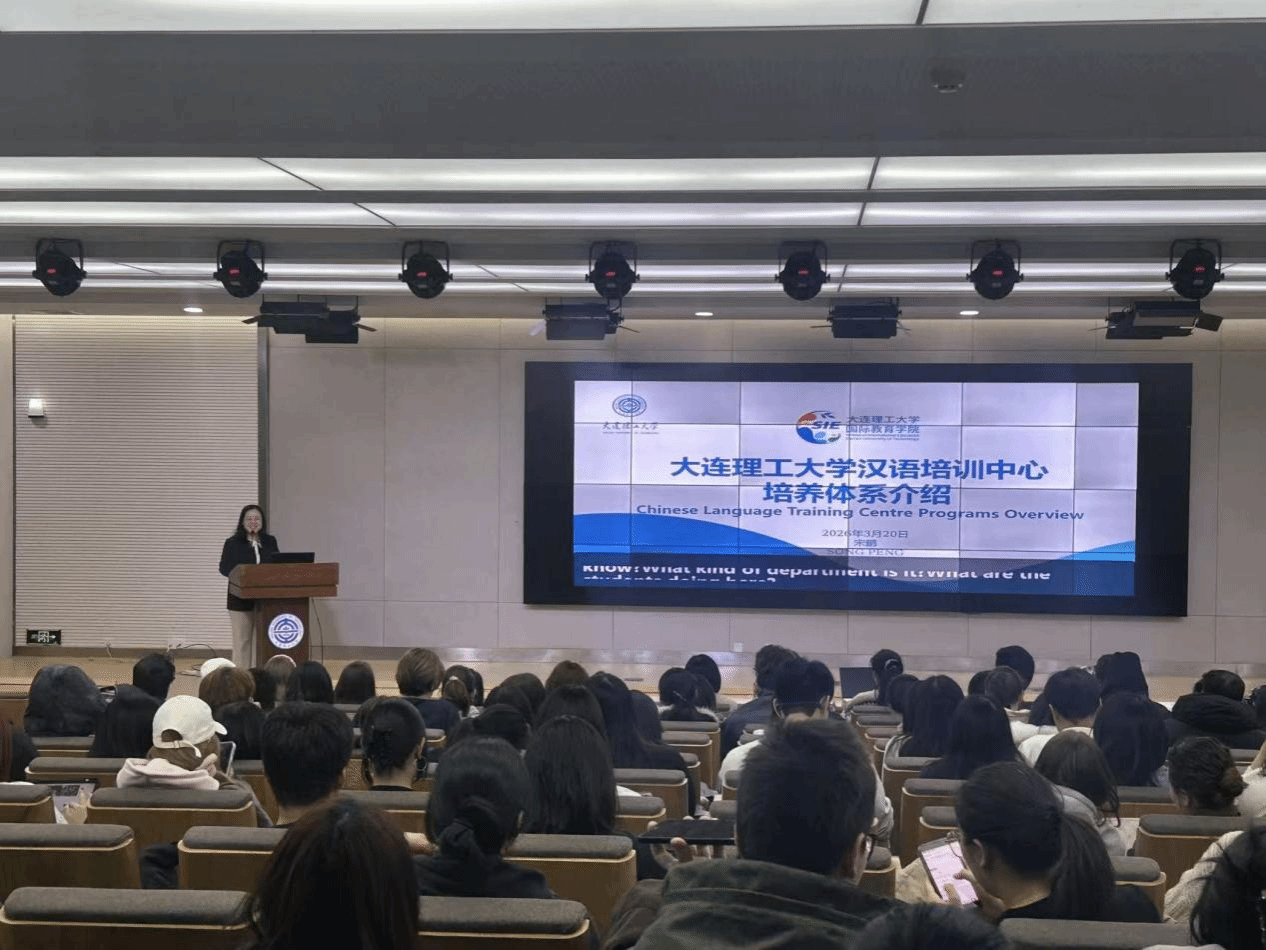
Following this, Ms. Song Peng, Director of the Chinese Language Training Center, systematically introduced the center's fundamental situation, training system, and talent cultivation model. Through his explanation, students gained a holistic understanding of the training objectives, curriculum structure, and assessment methods for the long-term Chinese language programs and Foundation programs. Subsequently, Ms. Song elaborated on aspects such as daily attendance management, academic support, and scholarship policies, and also outlined the key activity arrangements for the semester.
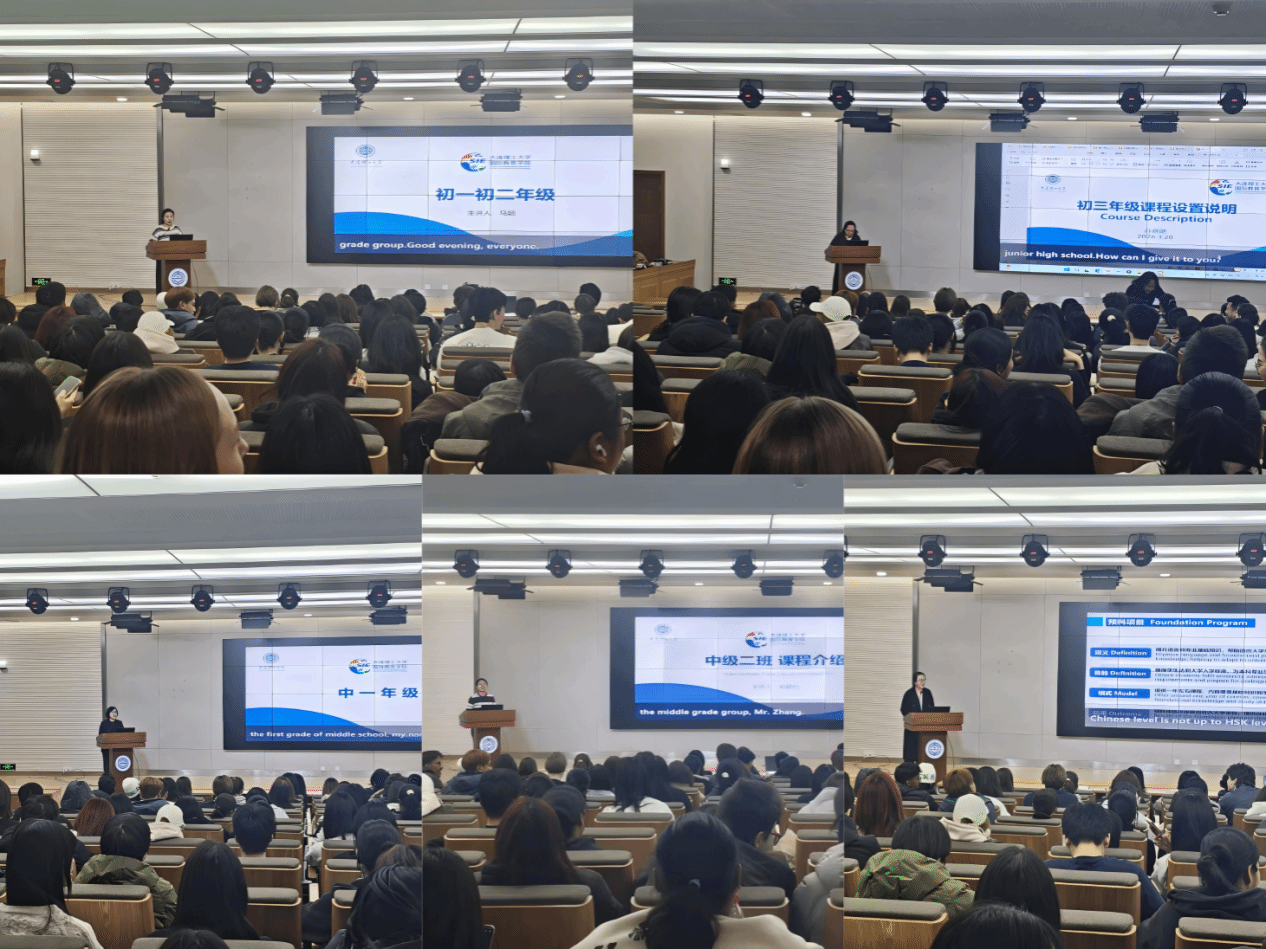
Afterwards, the group leaders for each grade level introduced the basic circumstances of their respective levels. Covering different tiers such as Elementary 1, Elementary 2, Elementary 3, Intermediate 1, Intermediate 2, Advanced 1, Advanced 2, and Foundation programs, they explained aspects including teaching objectives, curriculum design, and stage-specific characteristics. Considering the practical needs of students, they outlined the focal points of teaching arrangements for each grade and provided guidance on learning methods. Through this session, students gained a clearer understanding of their grade level's positioning and academic tasks, as well as a more defined direction on how to approach their studies, effectively boosting their confidence in learning Chinese and improving their proficiency.
This kick-off meeting was rich in content and clearly oriented. It not only helped students gain a comprehensive understanding of the university, school, and the Chinese Language Training Center's training system and academic arrangements, but also charted a clear course for their studies and development in the new semester. Moving forward, the Chinese Language Training Center will closely align with the university's "Double First-Class" construction goals, serve the development needs of international Chinese language education, and continuously optimize its cultivation pathway of "laying a language foundation – bridging to specialized studies – enhancing understanding of China." It will fully leverage its critical role as the "entry point" and "foundation stage" for international students studying in China, striving to cultivate globally-minded talents equipped with solid Chinese language skills, strong cross-cultural communication abilities, and a well-developed understanding of China. The center aims to support students in their transition from "learning Chinese" to "using Chinese," and ultimately to "using Chinese to understand China and engage in exchanges." It will continuously improve the quality of talent cultivation and its capacity to serve educational opening-up, providing strong support for enhancing the university's level of internationalization and the quality of international student education.