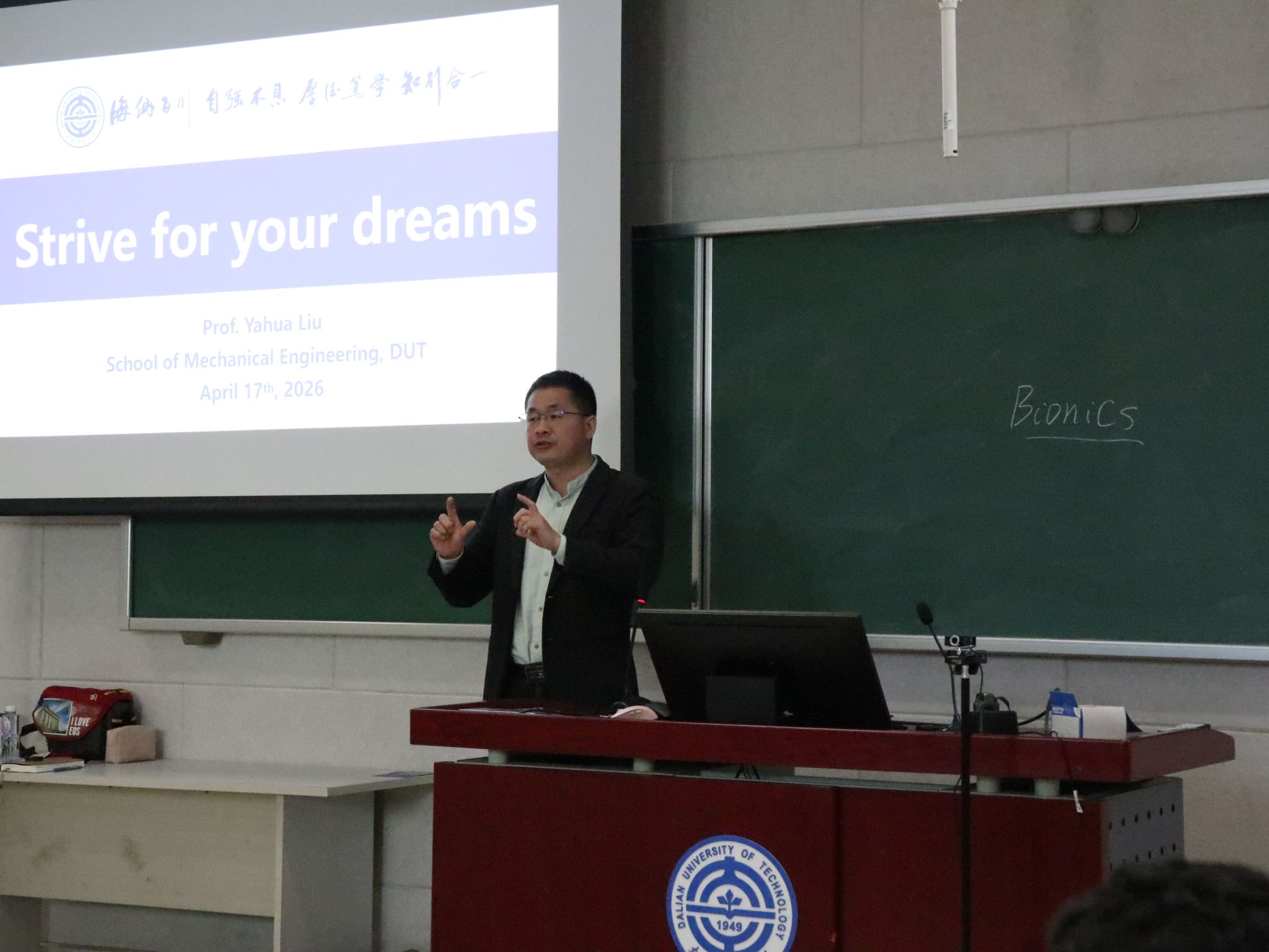
To effectively enhance international postgraduates' capabilities in writing and publishing high-level academic papers, and to help students clarify scientific research pathways and target high-impact journals, the School of International Education (SIE) of Dalian University of Technology successfully held a lecture of the "Duxue" Academic Navigation Series on the afternoon of April 17, 2026. The event specially invited Professor Liu Yahua from the School of Mechanical Engineering as the keynote speaker, who shared in-depth insights on "Achieving Excellence in Academic Publishing". The event was hosted by Du Xueling from the Teaching and Academic Affairs Office of SIE, with the participation of Guo Hanning, Assistant Dean of SIE, and nearly 70 international postgraduates.
During the lecture, Professor Liu Yahua drew upon his own scientific research experience to systematically elucidate that originality, problem-orientation, and practical value constitute the core essence of high-impact papers. He pointed out that failures far outnumber successes in scientific research, and researchers should rediscover their original aspirations amidst setbacks while resolutely avoiding "useless research" that lacks innovation and scientific contribution. Regarding how to conduct high-quality research, he proposed four key suggestions: first, to adhere to collaborative innovation—generate new ideas through teamwork without over-relying on high-end equipment, and let new concepts drive experiments and reveal new phenomena; second, to deepen interdisciplinary integration—combine strengths from different disciplines to form competitive advantages, stay abreast of research hotspots while also paying attention to long-neglected "sleeping papers"; third, to scientifically plan publication pathways—emphasize paper writing, figure quality, and logical presentation, and take editors' and reviewers' comments seriously; fourth, to make good use of the reviewer's perspective—stay ahead of academic frontiers by participating in the peer-review process, respect reviewer feedback, and communicate revisions effectively.
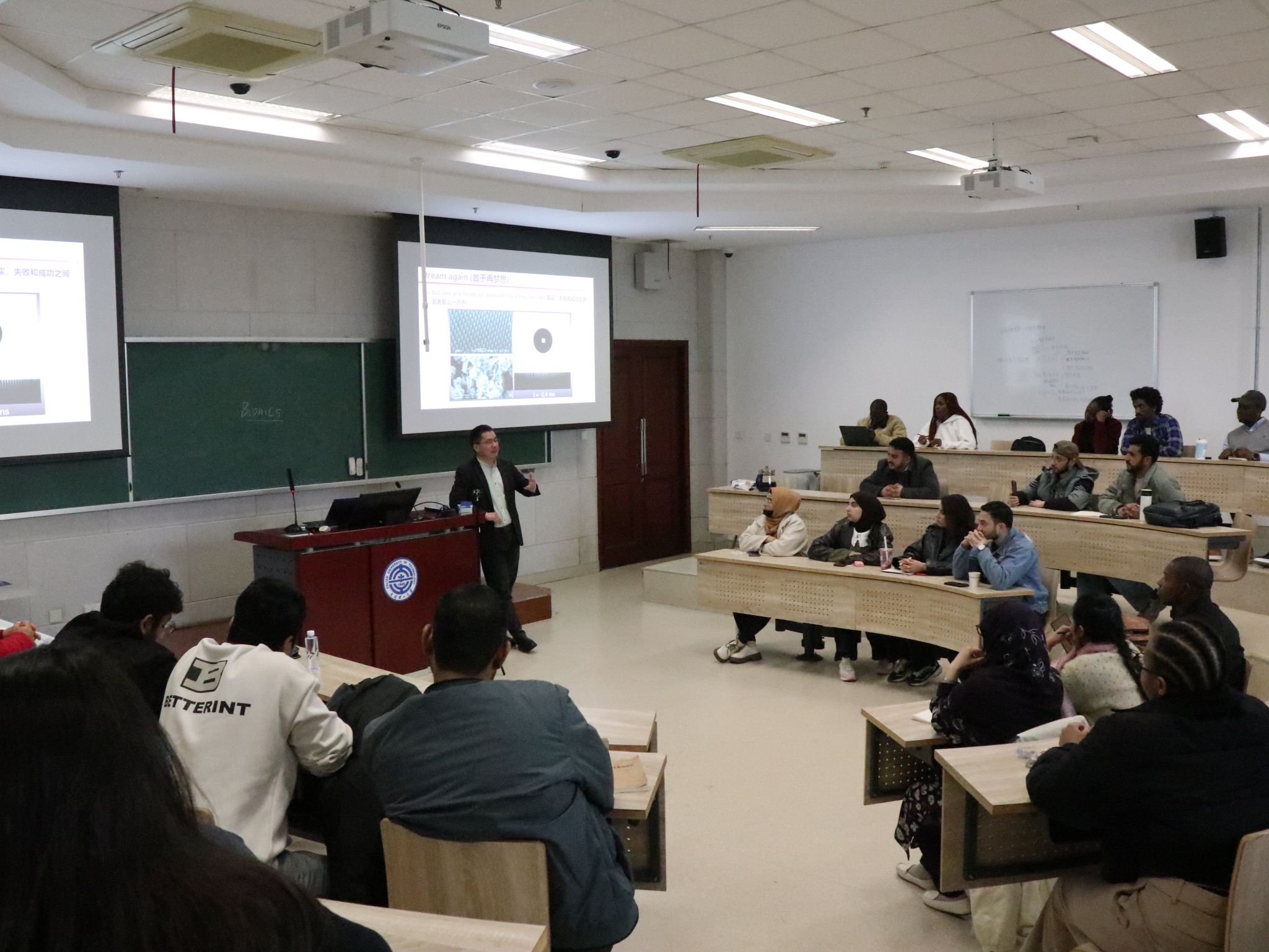
At the Q&A session, international postgraduates actively raised questions concerning research topic selection, interdisciplinary collaboration, handling reviewer comments, and graduation publication standards. Professor Liu Yahua provided detailed answers to each. He emphasized the importance of writing a persuasive cover letter when submitting manuscripts to effectively appeal to editors; when responding to reviewer comments, one should maintain a sincere attitude with sufficient evidence, and even when comments appear biased, rational communication supported by data is essential. High-quality figures serve as the "face" of a paper—clear logic and visually standardized presentation significantly increase acceptance probability. Acknowledging the differing graduation requirements across disciplines and training stages, he reminded students to communicate and confirm expectations with their supervisors in advance, and to plan their academic progress and publication schedule reasonably in order to steadily achieve their academic goals. Furthermore, he encouraged students to step out of the laboratory and into nature, drawing innovative inspiration from natural phenomena to achieve significant breakthroughs through small ideas and simple experiments. The on-site exchanges were in-depth and practical, with participating students expressing that the lecture was packed with valuable, applicable content and yielded substantial benefits.
This lecture represents an important initiative under the SIE "Duxue" Academic Navigation brand, precisely addressing the scientific research growth needs of international postgraduates and effectively tackling challenges in paper publication. Moving forward, SIE will continue to focus on core areas such as academic capability enhancement, research ethics cultivation, and career development guidance, launching more high-quality, specialized academic support activities. Through these efforts, SIE aims to comprehensively assist international postgraduates in solidifying their academic foundations and elevating their research literacy, thereby cultivating more high-level international talents who "understand China, befriend China, and possess international competitiveness."