To implement the "Three Excellence Plan" (Excellent Teachers, Excellent Students, Excellent Courses) and respond to the development requirements of educational digital intelligence transformation, the School of International Education (SIE) organized the 8th "Seeking the Path" Teaching Salon on July 17, 2026. The event specially invited Professor Lai Xiaochen, Liaoning Provincial Undergraduate Teaching Master and Director of the National Virtual Teaching and Research Office from the School of Software Engineering who delivered a thematic lecture titled "Smart Course Construction and Teaching Practice." The salon was chaired by Associate Professor Guo Hanning, Assistant Dean, with the participation of all full-time faculty and related graduate students.
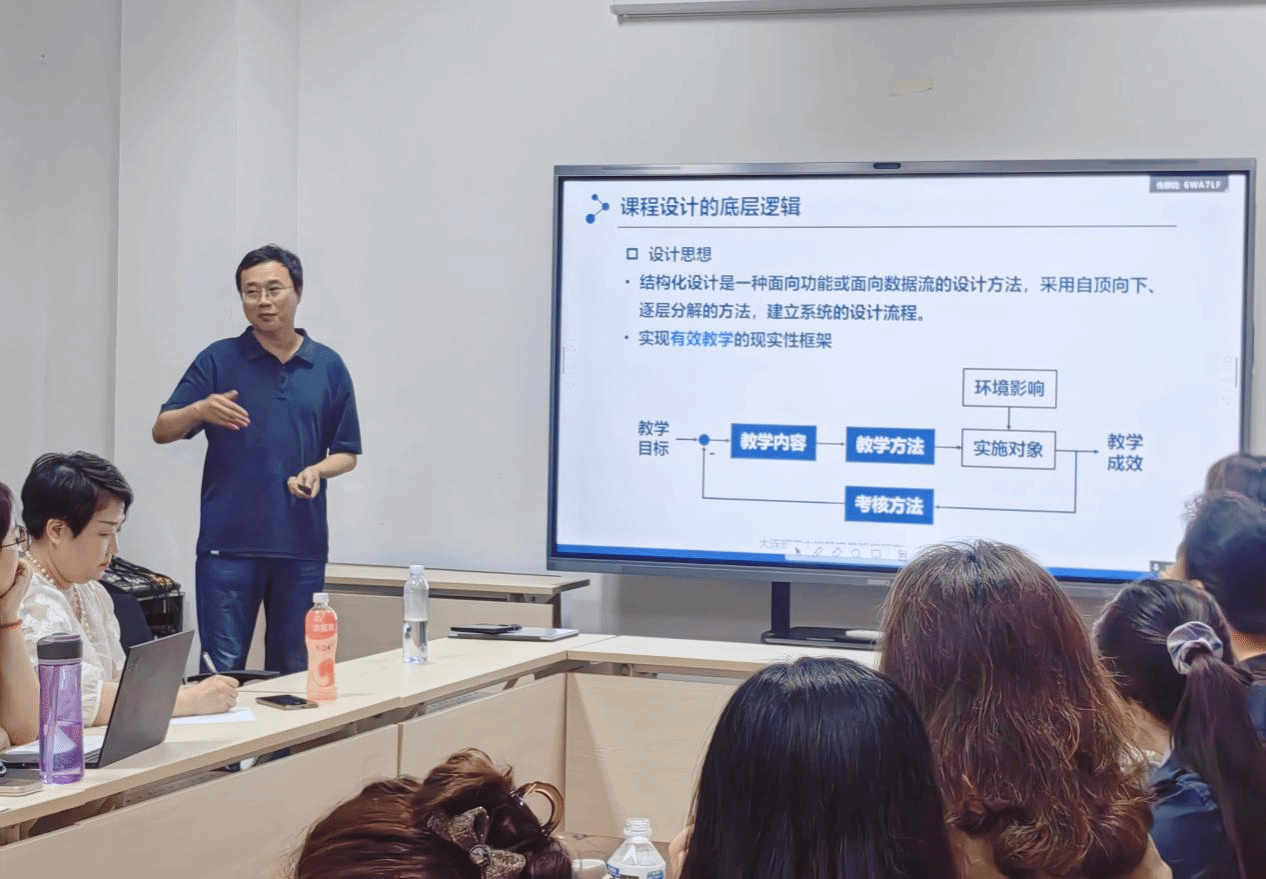
Professor Lai Xiaochen shared insights on two major themes: smart course construction and AI teaching integration. Based on the closed-loop feedback model, he explained the integrated curriculum construction system of "objectives-content-methods-assessment," and proposed optimization plans for three-dimensional objective design, layered resource construction, and quantitative dynamic assessment. The lecture clarified the definition of smart courses and the teacher-student-machine ternary collaborative teaching model, sorted out applicable scenarios of technologies such as AIGC, intelligent grading, and digital humans, and emphasized standardizing teaching in accordance with AI teaching application guidelines, rejecting formalistic "pseudo-smart classrooms." Combined with course examples, Professor Lai Xiaochen demonstrated the full-process digital intelligence transformation plan for pre-class, in-class, and after-class sessions, introduced innovative practices such as large model-empowered curriculum, learning situation prediction, and advocated for the rational selection of digital tools based on teaching reality.
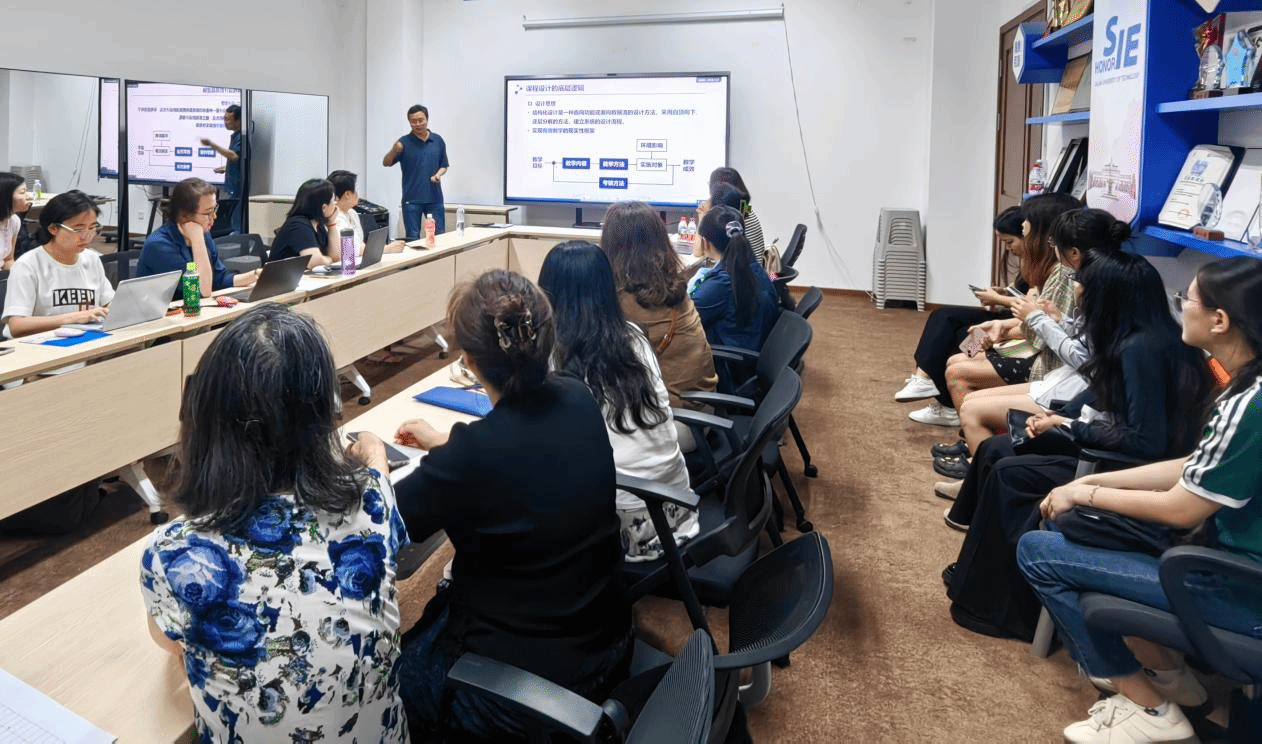
During the exchange and discussion session, participating teachers and students, combined with the professional teaching reality of international Chinese education, conducted exchanges and discussions with Professor Lai Xiaochen on issues such as the construction of dynamic performance evaluation systems, implementation paths of AI sentiment analysis, digital assessment of language course competencies, management of student AI-generated assignments, and credit recognition for blended teaching hours.
This salon, building on the achievements of previous digital intelligence teaching discussions, further refined and improved reform measures such as smart course construction, standardized application of AI teaching, and construction of diversified assessment systems, sorting out systematic and implementable paths for the digital and intelligent transformation of international Chinese courses. In the future, SIE will continue to launch thematic teaching exchange activities on digital intelligence teaching, international Chinese classroom innovation, and first-class course cultivation, consolidating the foundation of teaching construction through regular teaching discussions, and supporting the high-quality development of the "Study at DUT" brand.